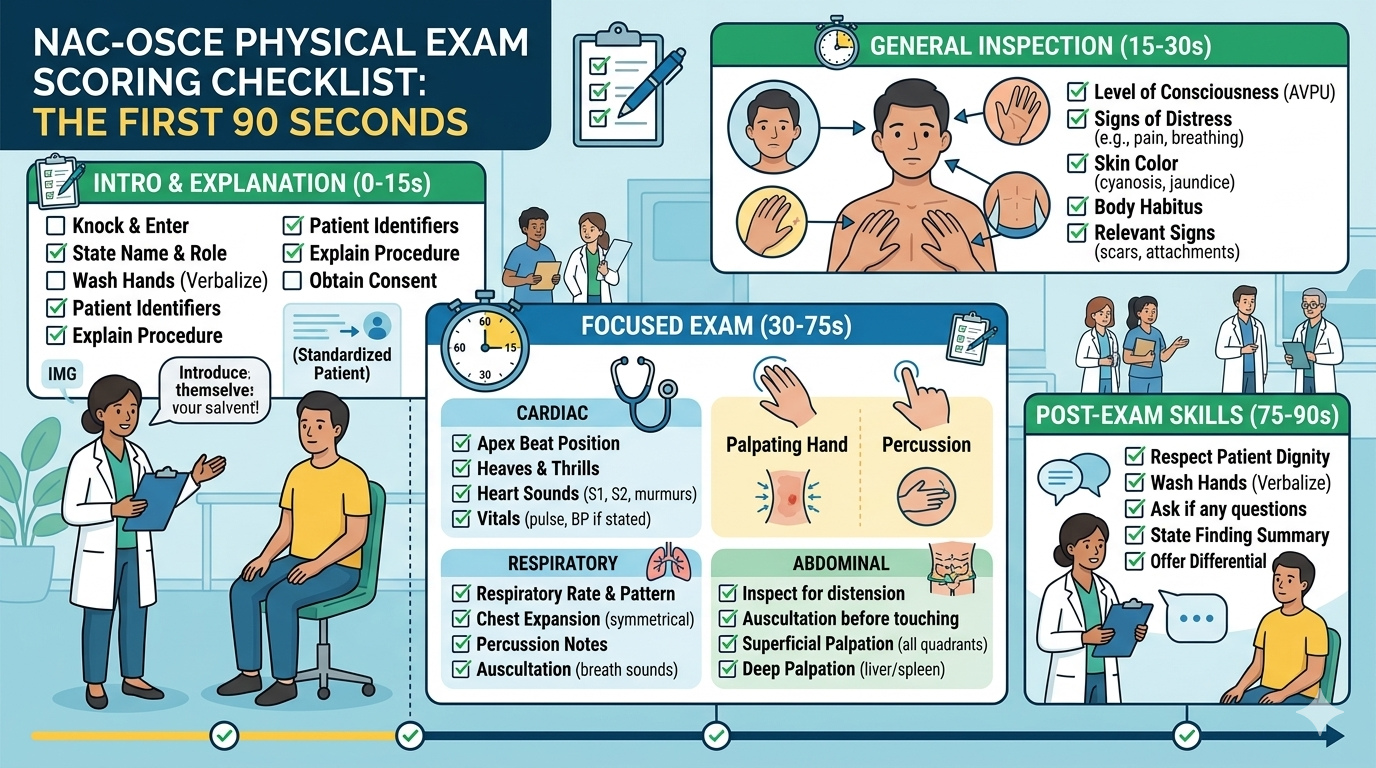
NAC-OSCE physical exam stations test efficiency under pressure. Each NAC station is 11 minutes long, and a physician examiner assesses you on up to 7 competencies per station; for physical examination, the MCC asks that you elicit findings “in an efficient logical sequence” and explain your actions to the patient (MCC: NAC Examination). Practise these steps with mccQbank.
Universal Steps for Every Physical Exam
- Introduces self and explains exam: “I’m Dr. X, here to check your [area] – okay to proceed?”
- Hand hygiene and positioning: Wash/ sanitize visible, patient comfortable (sitting/lying as needed).
- Inspection first: Look for scars, asymmetry, swelling, color changes before touching – verbalize: “No deformities noted.”
- Two-sided comparison: Palpate/percuss bilaterally – “Symmetric pulses” or “No heaves.”
System-Specific Steps
Cardiovascular: Auscultate 4 areas (aortic, pulmonic, tricuspid, mitral), carotid palpation (no massage), JVP height, apex beat, peripheral pulses (radial, femoral, DP/PT), edema pitting 5 secs.
Respiratory: IPPA all lobes (anterior/posterior), expansion symmetry, tactile fremitus, percussion resonance.
Abdominal: Light/heavy palpation 4 quadrants, liver span, aortic bruit, Murphy’s if RUQ pain.
MSK/Neuro: ROM active/passive, strength 5/5 vs resistance, reflexes (biceps, patellar, Achilles), sensation light touch.
Sequence and Verbal Cues
The MCC asks for an efficient logical sequence: Verbalize findings (“Clear lung bases”), move systematically (head-to-toe or IPPA), end with summary: “Exam normal except [key].”
Practise mccQbank NAC stations against the 11-minute station time, and video yourself to review your sequence. Avoid: rushing to touch without inspecting first, and forgetting pulses/edema.
Print these for mirror drills. Nail checklists with mccQbank.
Pro Tip: Always Verbalize Your Actions in NAC-OSCE Physical Exams
In NAC-OSCE physical exam stations, the MCC’s physical examination competency includes explaining your actions to the patient. Speak every step aloud: “Now inspecting for symmetry… Palpating the carotid gently… Auscultating mitral area…”