3.25.58 PM.png)
.png)
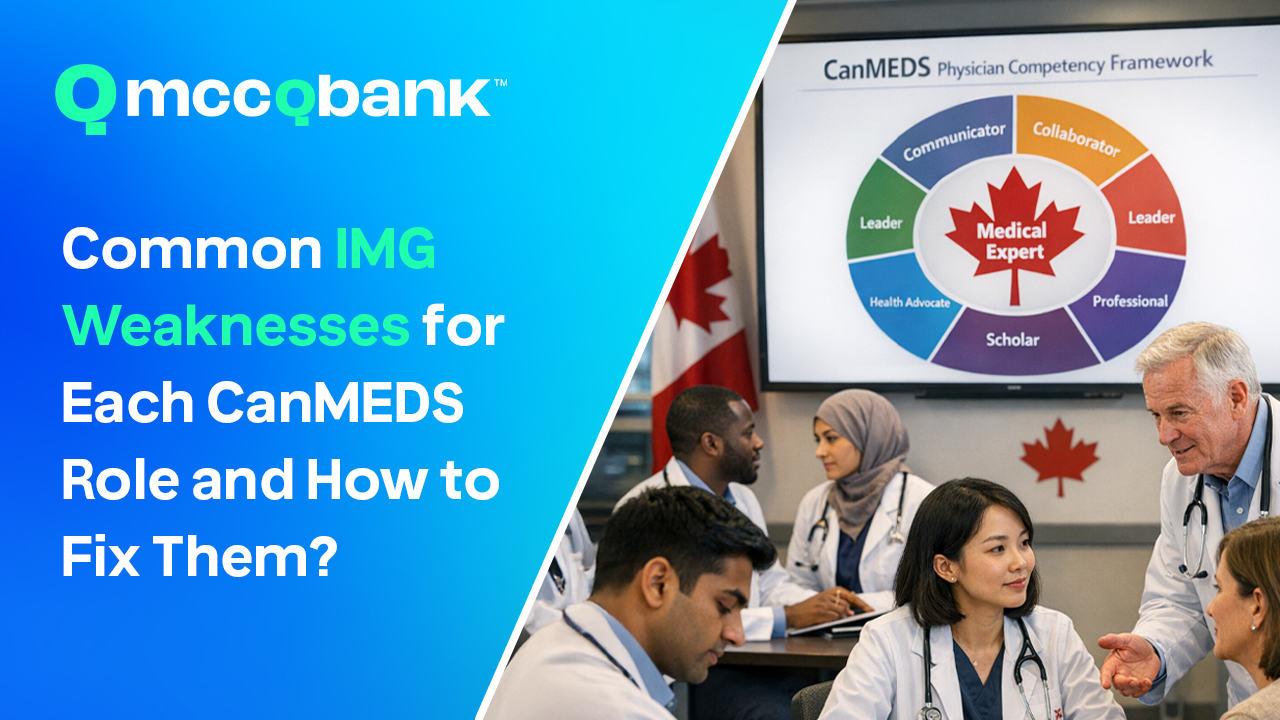
International Medical Graduates (IMGs) often excel as Medical Experts but face hurdles in the “intrinsic” CanMEDS roles during MCC exams, CaRMS applications, and residency interviews. Spotting these gaps early – and targeting them with deliberate practice – can boost your NAC-OSCE scores, personal statements, and match chances.
Medical Expert: Over-Reliance on Rare Diagnoses
IMGs from systems with limited diagnostics sometimes anchor too heavily on exotic diseases instead of common Canadian presentations like hypertension or community-acquired pneumonia. This shows in NAC-OSCE where examiners expect efficient, guideline-driven differentials.
Fix it: Run 50 mccQbank questions daily on high-yield MCC objectives, forcing yourself to list top-3 diagnoses first before rare ones. Review CanMEDS-aligned cases that blend expert knowledge with quick clinical reasoning.
Communicator: Direct vs Patient-Centered Style
Cultural norms lead many IMGs to jump straight to advice or tests, missing the open-ended rapport-building Canadians prioritize – think “Tell me more about how this affects your day” over “You need this medication.”
Fix it: Script 10 NAC-OSCE practice stations focusing on empathy phrases: “That sounds really tough” or “What worries you most?” Record yourself, then compare to MCC sample videos for tone and pacing.
Collaborator: Hierarchy Over Teamwork
Trained in top-down environments, IMGs may hesitate to defer to nurses or allied health, or struggle phrasing consults as equals – crucial in multidisciplinary Canadian rounds.
Fix it: Role-play scenarios with a study partner: “I’d value your input on this dressing change” to a mock nurse. Shadow Canadian teams via observerships, noting phrases like “Team, what are we missing here?”
Leader (Manager): Individual Focus vs Systems Thinking
IMGs often undervalue workflow tweaks, like handover protocols or resource allocation, appearing passive in manager/leader scenarios on MCCQE1 or interviews.
Fix it: Analyze 5 QBank CDM cases weekly: Map out steps as “Assign task to X, follow up with Y.” Build a one-page “leadership log” from rotations – even small wins like organizing a journal club count.
Health Advocate: Reactive vs Proactive Equity
Advocacy feels abstract; IMGs might address immediate needs but miss linking to social determinants, like food insecurity in diabetes management – key for CaRMS narratives.
Fix it: Prep 3 cases per week: For asthma exacerbation, add “Let’s connect you to community supports – any barriers to meds?” Read Canadian health equity reports and tie them to personal statements.
Scholar: Passive Learning vs Active Teaching
IMGs consume knowledge well but falter in summarizing evidence for patients or peers, or critiquing studies – evident in OSCEs or research interviews.
Fix it: Teach one MCC topic daily to a peer via Zoom, using “The evidence shows X because…” Turn QBank explanations into 2-minute flashcards.
Professional: Rigidity in Ethical Gray Areas
Cultural ethics clashes arise in consent or end-of-life talks, where IMGs push family involvement over patient autonomy, flagging in professional role assessments.
Fix it: Debate 5 ethics vignettes: “Patient refuses – do I override?” Journal reflections post-rotation. Use CanMEDS professional checklists in NAC prep to self-audit consent and boundary skills.
Mastering these turns CanMEDS from a checkbox to your edge – mccQbank’s role-mapped questions make targeted practice straightforward for IMGs aiming high.