3.25.58 PM.png)
.png)
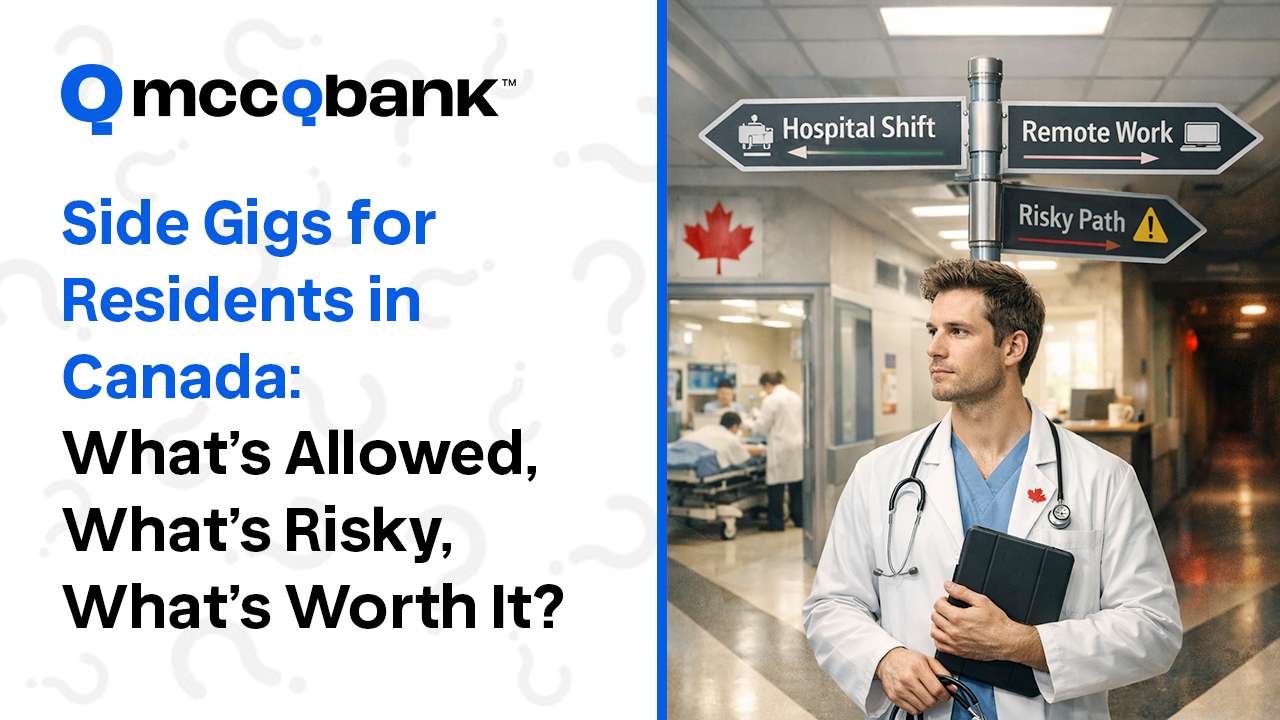
As a resident in Canada, extra income can help with loans or lifestyle, but rules around licensing, duty hours, and immigration make some options off-limits. This guide covers safe choices, pitfalls to avoid, and gigs that deliver real value without derailing your training.
What’s Generally Allowed: Moonlighting and Non-clinical Work
Moonlighting means extra clinical shifts outside your program, and it’s possible with restrictions. You need program director approval, proper provincial licensure, and CMPA coverage matching the work type – many PGME policies require proof of clinical competence too.
Non-clinical gigs face fewer hurdles. Tutoring med students, writing exam prep content, or research support usually works fine if it fits around your schedule and avoids patient care.
What’s Risky: Licensing, Duty Hours, and Immigration Status
Duty hours are the biggest barrier – Canadian programs cap continuous work at 24-26 hours with weekly totals often hitting 70-90, so extra shifts risk fatigue and program warnings.
Licensing gaps can void insurance – moonlight without the right credentials, and you’re personally liable for malpractice claims. IMGs must also confirm their work permit allows it, as freelance clinical work often violates terms.
What’s Actually Worth It: High-Value Side Gigs for Residents
Clinical moonlighting pays best once you’re PGY2+ and credentialed – think urgent care shifts that build skills and add $50-100/hour, but only if fatigue stays low.
Academic work like MCCQE coaching or journal reviewing strengthens your CaRMS profile while earning steadily. Remote options – medical writing, health tech consulting – offer flexibility if taxes stay simple.
Pick gigs where you can answer yes to: proper coverage? Duty safe? Career boost? Skip anything else during residency.