3.25.58 PM.png)
.png)
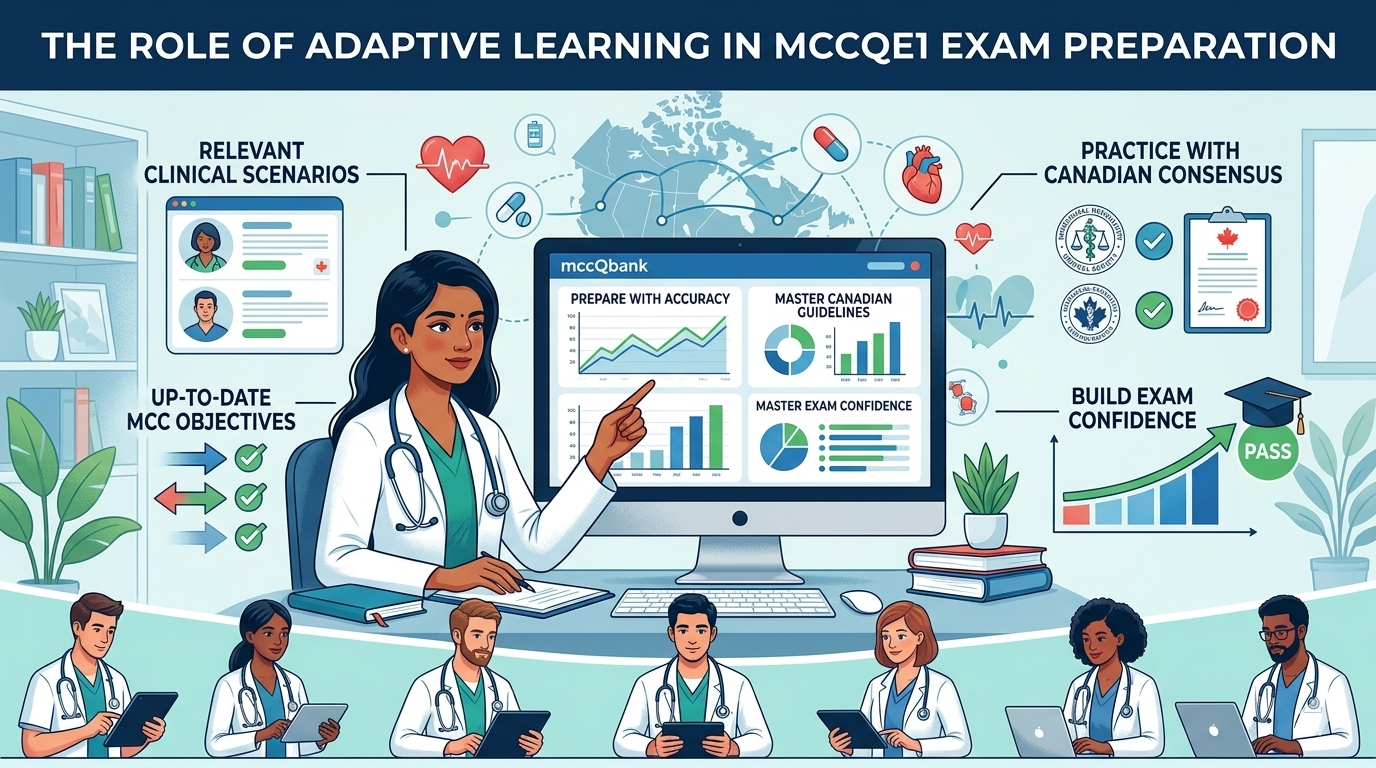
Preparing for the MCCQE1 requires more than simply studying large volumes of information. The exam evaluates clinical reasoning, decision-making, and the ability to apply knowledge in patient scenarios. As a result, modern exam preparation methods are increasingly moving toward adaptive learning, a study approach that personalises learning based on a candidate’s performance.
Adaptive learning systems analyse how a student answers questions and adjust the learning process to focus on areas that need improvement. This makes preparation more efficient and targeted, especially for candidates preparing for a demanding exam like the MCCQE1.
What Is Adaptive Learning?
Adaptive learning is an educational approach that uses data and performance analysis to tailor study content to the individual learner. Instead of presenting the same material to every student, adaptive systems adjust the difficulty, topic focus, and question selection based on previous responses.
For example, if a student consistently struggles with cardiology questions, the system may present more questions from that topic until the student demonstrates improvement. Conversely, topics that the student already understands well may appear less frequently.
This personalised approach allows candidates to focus their time on areas that require the most attention.
Improving Study Efficiency for MCCQE1 exam
One of the biggest challenges in MCCQE1 preparation is managing the vast amount of medical knowledge required for the exam. Traditional study methods often involve reviewing entire textbooks or notes, which may not always be the most efficient use of time.
Adaptive learning improves efficiency by identifying knowledge gaps early in the preparation process. Instead of spending equal time on all subjects, students can concentrate on the topics that need the most improvement.
This targeted learning approach helps candidates make better use of their study time, particularly for those preparing for the MCCQE1 alongside work or clinical responsibilities.
Strengthening Clinical Decision-Making
The MCCQE1 exam emphasises clinical problem-solving and decision-making. Adaptive learning platforms support this by presenting a wide variety of case-based questions and gradually increasing difficulty as a student’s performance improves.
As candidates practise more questions, they are exposed to diverse clinical scenarios that strengthen their ability to analyse patient presentations, choose appropriate investigations, and determine the best management strategies.
This repeated exposure helps build the clinical reasoning skills that are essential for success on the MCCQE1.
A Smarter Approach to MCCQE1 Preparation
Modern exam preparation increasingly relies on data-driven learning tools that help students study more effectively. Adaptive learning is a key part of this shift, allowing candidates to focus on their weaknesses while reinforcing their strengths.
Platforms such as mccQbank incorporate structured question practice and performance tracking to support MCCQE1 preparation. By continuously analysing progress and guiding students toward areas that need improvement, adaptive learning helps candidates develop stronger clinical understanding and approach the exam with greater confidence.