3.25.58 PM.png)
.png)
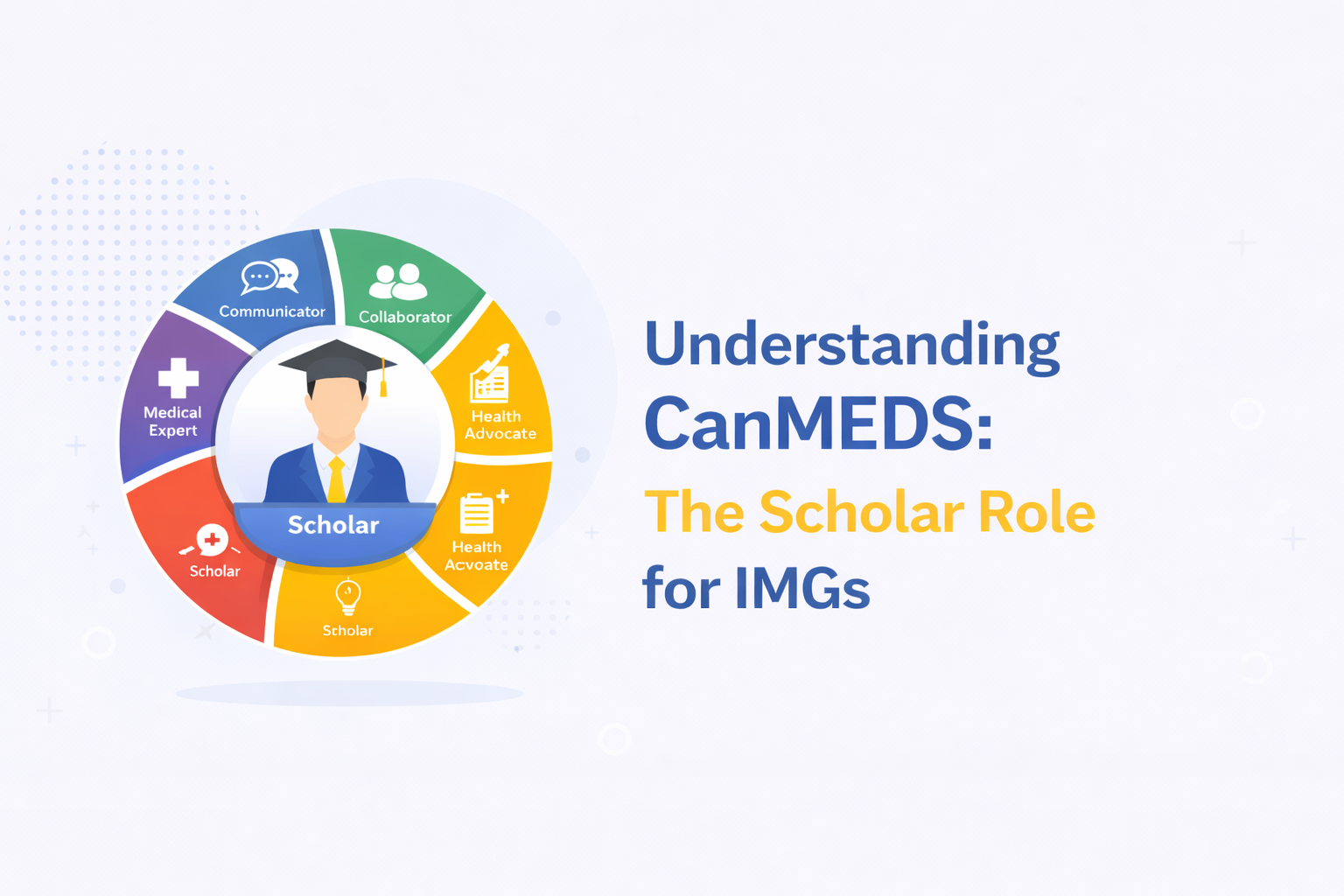
The CanMEDS Scholar role goes beyond memorizing facts – it’s about lifelong learning, teaching others, and applying evidence critically, a must for MCCQE1 ethics questions and CaRMS interviews. This guide breaks down its core competencies and how IMGs build it using mccQbank practice.
Lifelong Self-Learning: Staying Current in a Changing Field
Scholars actively seek knowledge gaps and pursue self-directed learning, like scanning UpToDate for new guidelines or auditing webinars on AI diagnostics.
IMG Fix: After every mccQbank block, note 3 “why wrong?” insights. Subscribe to 2 Canadian journals (CMAJ, CPSO updates) – 15 mins daily keeps you ahead of evolving MCC objectives.
Critical Appraisal: Judging Evidence Quality
This means dissecting studies for bias, relevance, and applicability – e.g., “Does this RCT fit my diabetic patient from rural Ontario?”
IMG Fix: For 10 mccQbank ethics questions weekly, outline: Population? Intervention? Outcomes? Apply to vignettes. Free tools like CASP checklists sharpen this fast.
Knowledge Creation: Research and Innovation
Scholars contribute via audits, case reports, or quality projects – even small QI like optimizing handover sheets counts for portfolios.
IMG Fix: Log one rotation project monthly: “Reduced order errors 20%.” Use mccQbank analytics for personal “study” – publish anonymized trends on MedEd forums.
Knowledge Dissemination: Teaching and Mentoring
Explain complex ideas simply to patients, peers, or students – think breaking down statin risks or leading journal club.
IMG Fix: Teach 1 mccQbank topic daily to a mirror or peer via Zoom: “In plain language…” Record NAC-OSCE stations emphasizing teach-back: “Does this make sense?”
For IMGs, Scholar bridges knowledge to Canadian practice – weak here hurts OSCEs and apps. Dive into mccQbank’s questions to log real examples today.