3.25.58 PM.png)
.png)
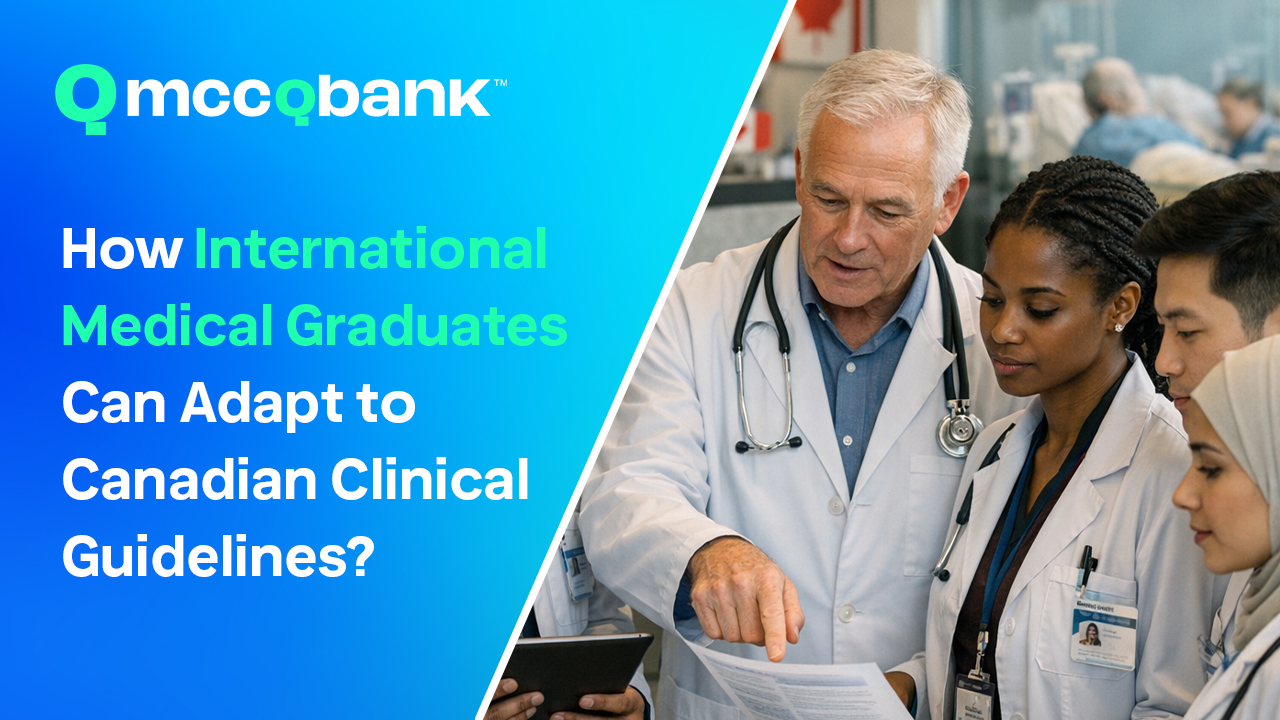
For international medical graduates (IMGs) planning to practise in Canada, adapting to Canadian clinical guidelines and healthcare practices is an important step in the transition. Even experienced physicians often find that medical decision-making in Canada emphasises specific national guidelines, preventive care strategies, and patient-centred approaches.
Understanding these differences is essential not only for clinical practice but also for exams such as the MCCQE1, which frequently tests medical decision-making within the Canadian healthcare context.
Understanding the Canadian Approach to Evidence-Based Care
Canadian medicine places strong emphasis on evidence-based practice, meaning that clinical decisions are guided by nationally recognised recommendations developed from research and population health data.
Physicians in Canada often rely on guidelines from organisations such as:
- The Canadian Task Force on Preventive Health Care
- Hypertension Canada
- Diabetes Canada
- The Society of Obstetricians and Gynaecologists of Canada (SOGC)
These organisations regularly publish updated recommendations on screening, diagnosis, and management of common conditions. For IMGs, becoming familiar with these sources helps ensure that clinical decisions align with Canadian standards.
Emphasis on Preventive Care and Screening
One of the most noticeable differences for many IMGs is the strong emphasis on preventive healthcare in Canada. Physicians are expected to integrate screening and health promotion into routine clinical encounters.
Examples include:
- Age-appropriate cancer screening
- Cardiovascular risk assessment
- Vaccination recommendations
- Lifestyle counselling for chronic disease prevention
Preventive care often appears in MCCQE1 questions because it reflects an important component of Canadian primary care practice. IMGs preparing for the exam should therefore understand when screening tests are recommended and how preventive counselling is incorporated into patient visits.
Patient-Centred and Shared Decision-Making
Canadian healthcare also places significant importance on patient autonomy and shared decision-making. Physicians are expected to involve patients in discussions about their care, explain available options, and respect patient preferences.
This approach can appear in both clinical practice and licensing exams through scenarios involving:
- Informed consent
- Discussing risks and benefits of treatment options
- Respecting patient values and cultural considerations
- Communicating diagnoses and management plans clearly
IMGs adapting to the Canadian system should focus on developing strong communication skills and ensuring that patients remain active participants in clinical decision-making.
Learning Through Clinical Scenarios and Case-Based Practice
Adapting to Canadian clinical guidelines is often easier when learning through case-based scenarios. Clinical cases help illustrate how guidelines are applied in real patient situations, allowing candidates to understand both the reasoning and the decision-making process.
Practising clinical scenarios also helps IMGs become familiar with the types of questions used in Canadian medical examinations, which often require selecting the most appropriate next step in management rather than simply identifying a diagnosis.
Preparing for Canadian Exams with the Right Resources
For IMGs preparing for the MCCQE1, using resources aligned with Canadian clinical practice is essential. Studying materials based on other healthcare systems may not always reflect the screening recommendations, treatment strategies, or patient care principles expected in Canada.
Practising exam-style questions that incorporate Canadian guidelines can help candidates become comfortable with the clinical reasoning expected in the exam. Platforms such as mccQbank provide structured practice questions designed specifically for MCCQE1 preparation, helping IMGs strengthen their understanding of Canadian medical decision-making.
By gradually familiarising themselves with Canadian guidelines, preventive care practices, and patient-centred communication, international medical graduates can transition more smoothly into the Canadian healthcare environment and prepare effectively for their licensing exams.