3.25.58 PM.png)
.png)
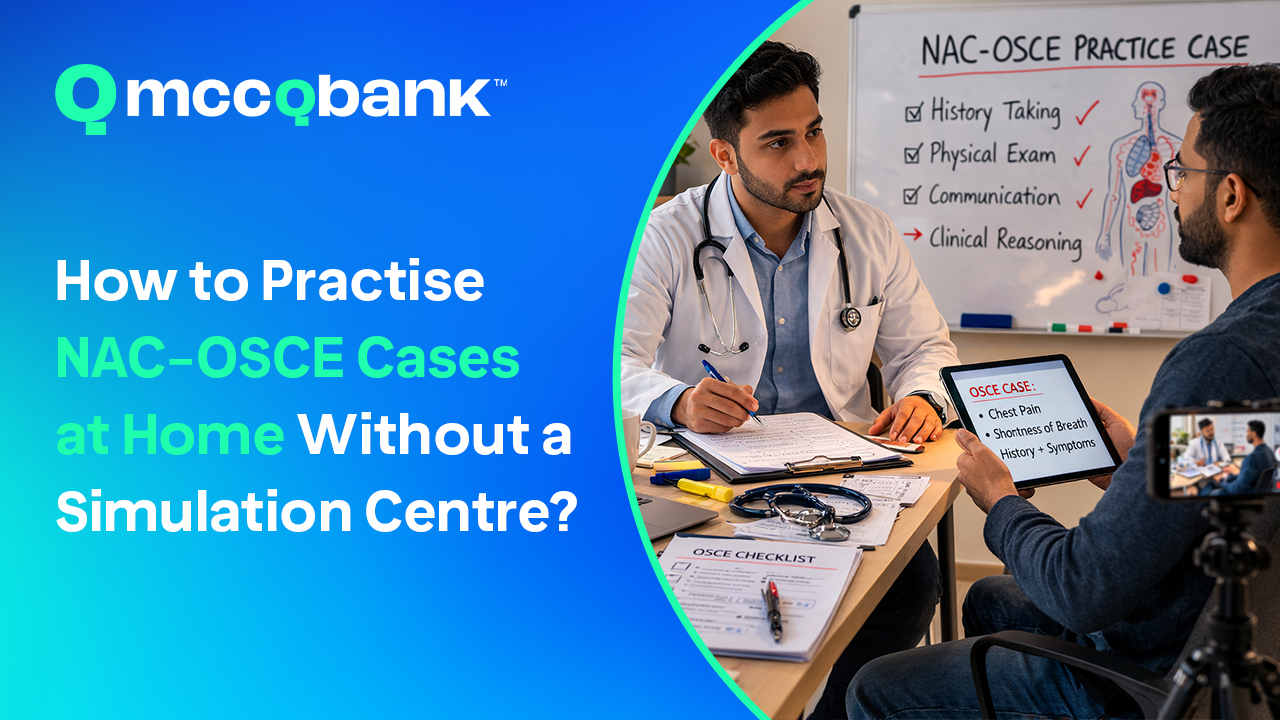
NAC-OSCE demands polished communication and exam skills, but simulation centres cost time and money. IMGs can master stations solo at home using everyday tools and mccQbank cases – no partner required.
Gear Up With Minimal Equipment
You need a smartphone or laptop, a mirror, and a timer app – total cost zero if you own a phone. Dress in business casual to mimic exam day mindset.
Prop the device on books for hands-free recording. With mccQbank, access NAC stations instantly – each with checklists and feedback triggers.
Solo Station Practice: The 8-Minute Cycle
Pick one mccQbank case (counseling, physical exam, diagnosis). Read the door sheet aloud, knock, and start your 11-minute station timer.
Perform aloud: For history-taking, ask open-ended questions while facing the camera. Physical exams? Demonstrate maneuvers on yourself or air – have someone hold the tablet if available, but solo works fine with a tripod or stack.
Stop at 8 minutes, score against mccQbank’s rubric: Did you hit ICE (Information, Consent, Explanation)? Replay video for filler words, eye contact, closure.
Simulate Feedback Without a Medical Partner
mccQbank lets you practice NAC-OSCE even without a medical partner – the platform’s AI feedback flags empathy gaps or missed checklists post-recording.
Self-audit with voice memos: “Too directive? Add ‘What questions do you have?'” Track 5 stations daily across types (data gathering 40%, management 30%).
Review weekly: If counseling scores <7/10, drill phrases like “That sounds frustrating – tell me more.”
Scale to Full Circuit Mode
After 20 solo stations, run 10-station circuits: 2-minute breaks, no peeking answers. Use mccQbank progress tracker to hit 80% checklist completion.
Add distraction: Play faint background noise or have family interrupt once – builds resilience for real exam chaos.
Master this at home, and NAC-OSCE becomes routine. mccQbank’s virtual stations make partner-free practice scalable – start your first case today.