
How Long Is the MCCQE1 Exam? 6.5 Hours, Section by Section
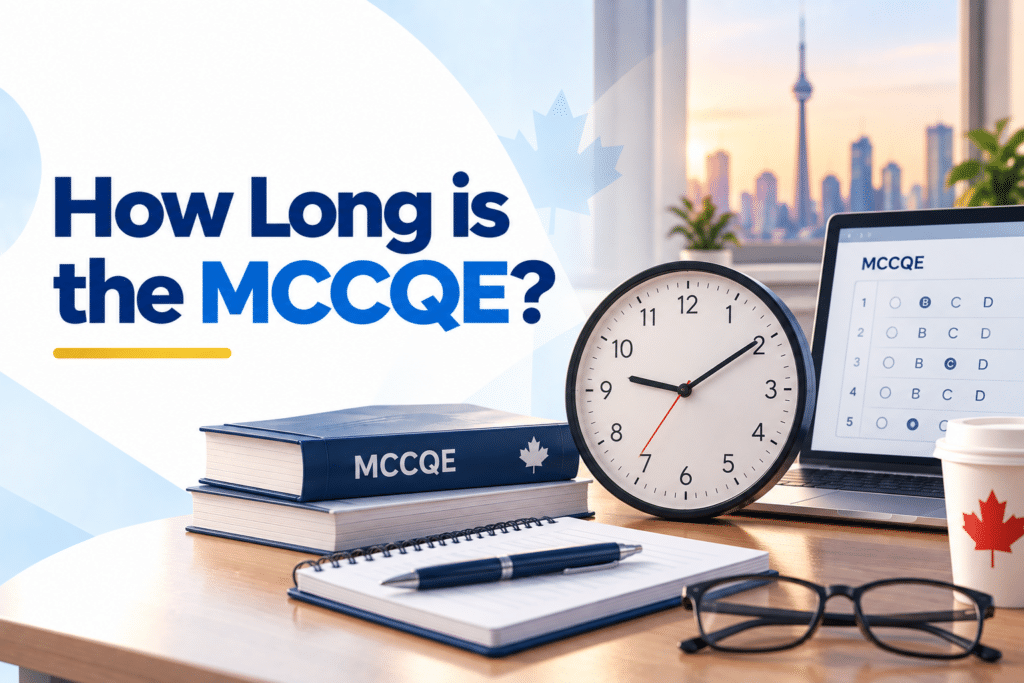
The MCCQE1 is a 6.5-hour appointment: 230 questions in two sections of 2 h 40 min, with an optional 45-minute break. Exact timing, pacing and results.
MCCQE Reddit: r/MCCQE, Premed101 and What Candidates Ask
By Dr. Bilal Akil, MD — Emergency Medicine, Schulich School of Medicine & Dentistry, Western University · founder of mccQbank Short answer: most MCCQE (formerly MCCQE Part I, or “MCCQE1”) discussion online happens in a handful of places: They’re good for study plans and first-hand experience. They’re often out of date on the rules, so […]
NAC Score and CaRMS: What R-1 Programs Publish
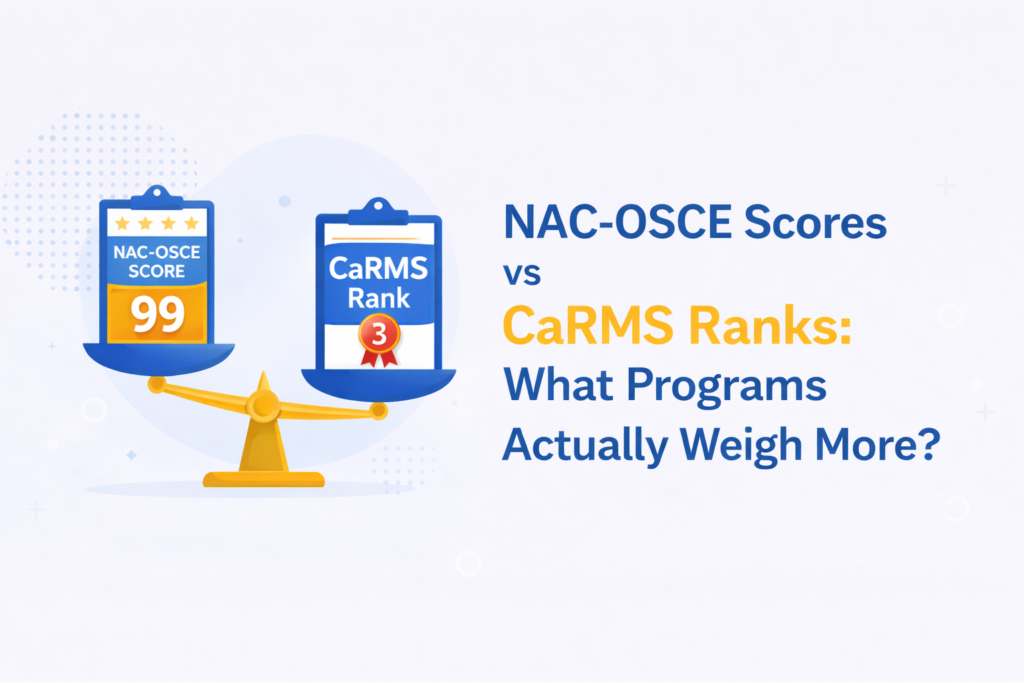
By Dr. Bilal Akil, MD — Emergency Medicine, Schulich School of Medicine & Dentistry, Western University · founder of mccQbank Short answer: For IMGs, the NAC Examination is first an eligibility gate: CaRMS’s 2027 R-1 summary marks it as required in every provincial column, including Quebec, where a footnote explains that Quebec’s medical schools “continue […]
NAC Physical Exam Stations: A Practice Routine
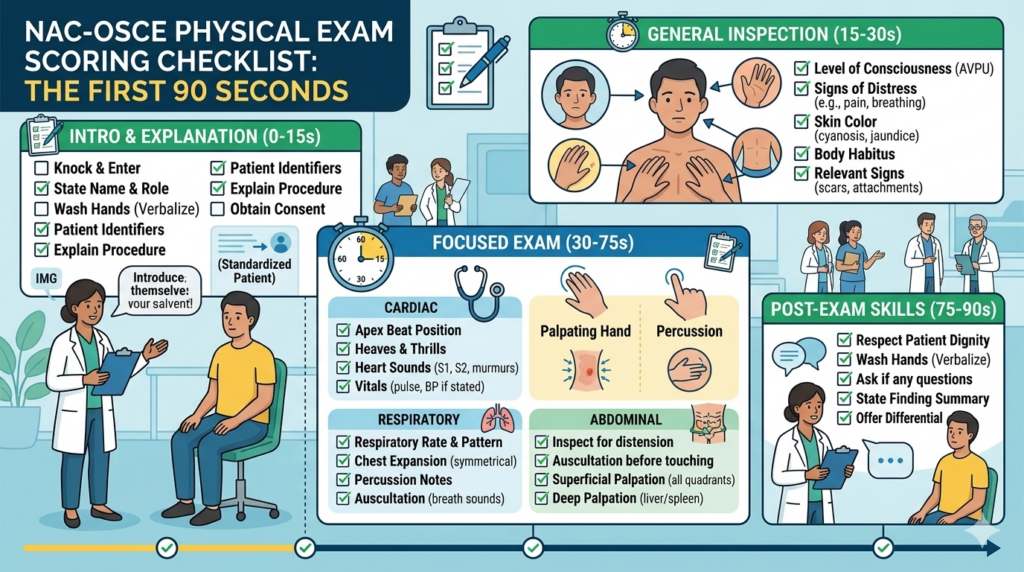
NAC-OSCE physical exam stations test efficiency under pressure. Each NAC station is 11 minutes long, and a physician examiner assesses you on up to 7 competencies per station; for physical examination, the MCC asks that you elicit findings “in an efficient logical sequence” and explain your actions to the patient (MCC: NAC Examination). Practise these […]
MCCQE1 + NAC-OSCE Timeline Overlap: Which to Write First as an IMG?
IMGs face tight windows juggling MCCQE1 and NAC-OSCE before CaRMS deadlines – wrong order risks rushed prep or missed apps. This guide maps 2026 dates and optimal sequencing using mccQbank to dual-prep efficiently. 2026 Exam Windows and Key Deadlines In 2026 the MCCQE runs January 20 to February 17, April 22 to May 30, and […]
Top Communication Mistakes IMGs Make in NAC-OSCE and Easy Script Fixes
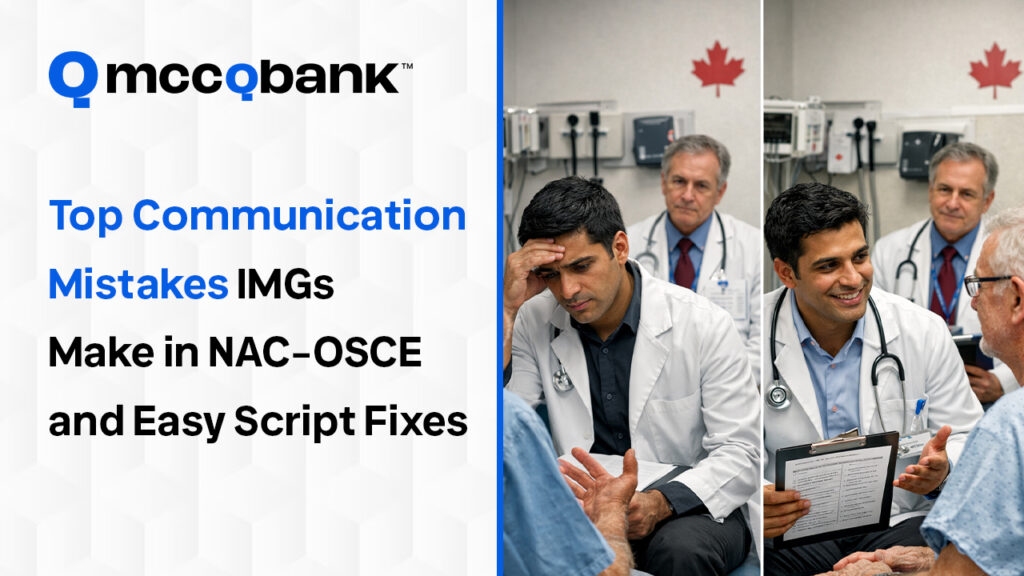
In the NAC Examination, physician examiners assess up to 7 competencies per station, and one of them is communication skills: the MCC describes a “patient-centered approach” that “establishes trust and respect and shows sensitivity to the patient’s needs”. This post breaks down five communication errors with plug-and-play scripts. Mistake 1: Info-Dumping Before Listening Launching into […]
How to Practise NAC-OSCE Cases at Home Without a Simulation Centre

NAC-OSCE demands polished communication and exam skills, but simulation centres cost time and money. IMGs can master stations solo at home using everyday tools and mccQbank cases – no partner required. Gear Up With Minimal Equipment You need a smartphone or laptop, a mirror, and a timer app – total cost zero if you own […]
How International Medical Graduates Can Adapt to Canadian Clinical Guidelines

For international medical graduates (IMGs) planning to practise in Canada, adapting to Canadian clinical guidelines and healthcare practices is an important step in the transition. Even experienced physicians often find that medical decision-making in Canada emphasises specific national guidelines, preventive care strategies, and patient-centred approaches. Understanding these differences is essential not only for clinical practice […]
The Difference Between Knowledge and Clinical Application in the NAC-OSCE

Preparing for the NAC-OSCE requires a different approach compared with written medical exams. While medical knowledge is still important, the NAC-OSCE also evaluates how well candidates apply that knowledge in clinical interactions: the MCC says it tests “the knowledge, skills, and attitudes essential for entrance into postgraduate training”. Strong theoretical understanding is not enough on […]
5 Common Mistakes that Students Make on the NAC-OSCE Exam

Preparing for the NAC-OSCE exam is a crucial step for medical professionals hoping to practice in Canada. Despite diligent preparation, many candidates falter on common pitfalls that could easily be avoided. Becoming aware of these mistakes can significantly enhance exam performance. Here’s a guide tailored for doctors who are preparing for the NAC-OSCE: 1. Missing […]